Building Strong Player Relationships: The Key to Game Success

Share Via:

Every great game thrives thanks to its players. Sure, the mechanics, storylines, and jaw-dropping visuals matter, but so does how players feel about the game experience and their connection to the community behind it. When players feel valued, engaged, and heard, they stick around. 

But let’s be honest: building meaningful player relationships isn’t as simple as answering a customer support ticket, sending a survey, or fixing bugs. It’s about LISTENING. It’s about understanding what players need, anticipating what they want, and delivering on those expectations in ways that feel natural and impactful. It takes empathy, open communication, and a real commitment to creating a sense of community and belonging. And in the rush to get a game to market, it’s often where studios fall short. 

Where Player Relationships Break Down

Even the most immersive games can lose their charm when players feel disconnected or unheard. Often, studios focus on video game development and leave player engagement as an afterthought, addressing a myriad of issues only after players report them. 

Communication is key. Simply logging bugs or pushing out updates without keeping your players informed doesn’t help anyone. It’s akin to the “if a tree falls in the forest, does anyone hear it?” 

The result can be frustration, broken trust, and ultimately, players leaving the game and/or your brand entirely. To keep players engaged for the long haul, studios need to shift from reactive problem-solving to proactive relationship-building.  

Building a Foundation of Trust & Empathy 

At the heart of every strong player relationship is trust. Players need to feel confident that their comments, concerns and opinions are heard. That the studio delivers on its promises, listens to the feedback, and values their time for sharing in the first place. 

Trust isn’t built through big updates or flashy marketing, it comes from action. From doing what you say you’re going to do — and more importantly, managing expectations by providing clear timelines for updates when possible, and owning up to delays when they happen. If you treat players like collaborators, not just transactional customers, you’ll see that brand loyalty grow. 

Engaging with empathy is equally important. Whether it’s resolving issues quickly or actively participating in community forums, studios that connect with players on a human level are the ones who lay the groundwork for trust and long-term success. 

How to Build Stronger Player Relationships 
Blending technical excellence with genuine engagement is a sure way to build meaningful connections with players: 

  1. Listen and Learn 
    Analytics provide trends, but don’t tell the full story. Take a look at direct feedback — via forums, surveys, comments, and in-game interactions — that’s where you can find the real story. From quick fixes to longer-term development strategy, you’ll benefit from a little research and social listening. 
  1. Stay in Touch 
    Do your players know what you’re doing to help? Regular updates keep players in the loop. Game Development blogs, live Q&A sessions, and direct responses in forums can make players feel like their voices matter (social media is about two-way communication, not one way “push”). Active communication can turn passive audiences into loyal communities and brand ambassadors. 
  1. Show You Care 
    Engagement isn’t just about solving problems. Player support isn’t like a bakery. It’s not just a transactional ticket. Personal touches like a simple thank you note addressed to a comment can make a big difference. Even small gestures, like exclusive rewards for beta testers, can go a long way. Get personal and creative.

Why Player Relationships can be a Game-Changer

Investing in player relationships doesn’t just boost player retention — it builds communities of advocates. Players who feel connected to a game help spread the word and create positive environments for others. For studios, that means loyal players, higher levels of engagement, and a stronger reputation in the video game industry

How GlobalStep Can Help 

At GlobalStep, we’ve spent nearly two decades helping studios create player-first experiences and connect with their audiences. 

Our Player Engagement Services offer 24/7 multilingual support, ensuring players feel heard and valued no matter where they are. Whether it’s handling app store reviews, in-game support or live chat, we prioritize efficient yet empathetic communication. 

Our expertise in community management also helps studios foster fair, transparent, and inclusive game environments. We combine human insights with leading-edge technology to help studios exceed player expectations — building the kind of relationships that lead to lifelong loyalty. 

When it comes to creating connections that matter, we’ve got your back. Let’s build something incredible together. 

Contact us today at Sales@globalstep.com to learn how to build better player relationships.

Click here for to learn more about our Player Engagement Services.

Click here to check out our testimonials  from GlobalStep customers.
You might also want to check
Choosing the Right Game Art Partner for Seamless Workflow

Choosing the Right Game Art Partner for Seamless Workflow

In Part 1 of this blog series, we discussed how game art outsourcing is a strategic benefit for developers that value both quality and scaling. Part 2 then dissected the…
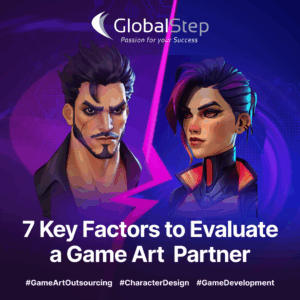
7 Key Factors for Evaluating a Game Art Partner

7 Key Factors for Evaluating a Game Art Partner

Developing art for a video game is a complex craft. It’s not just about making something look good, but translating your vision into a living, breathing world on screen. That…
Outsource to Outperform: How to Choose the Best Game Art Partner in 2025

Outsource to Outperform: How to Choose the Best Game Art Partner in 2025

Finding the right game art partner is no easy quest, and the success of your game could depend on it. In this two-part blog series, we’ll start by exploring why outsourcing is often the best choice, plus key models and benefits to consider before choosing a partner. Let’s get started!

The global gaming market is on track to exceed $363 billion by 2027. (UStimes) So, it goes without saying that making game art that stands out from the rest is a critical competitive advantage. Visuals aren’t just decoration — they form players’ first and lasting impressions. High-impact environments, memorable characters, and intuitive UI drive engagement and retention through thoughtful character design and overall game design.

Whether you’re an indie studio or an established publisher, augmenting your core art team with specialized partners lets you scale rapidly and control costs. But choosing the wrong partner can undermine your creative vision, slow your game development timeline, and ultimately your budget.

Partnering with the right game art team means balancing quality, speed, cost, and cultural fit — and that’s where GlobalStep’s nearly two decades of stylized-and-casual expertise ensures your project looks and plays exactly as you intend.

In-House vs. Outsourcing: Choosing the Right Model

To decide between in-house and game development outsourcing, compare the trade-offs below. An internal team offers full control and shared culture, while a game art outsourcing studio delivers on-demand game art services — from 2d game art outsourcing to 3d art services — with minimal overhead. Top game art outsourcing companies streamline art outsourcing and outsourcing game art so you scale fast without sacrificing quality.

 In-House TeamOutsourced Partner
Control & CultureDirect oversight, shared company values.Leverage established processes — vetted partners primed to learn and embody your team culture and adapts quickly to your priorities.
Upfront InvestmentVery high (hiring, benefits, workspace, training).Minimal — only pay for delivered assets, no long-term commitments or overhead.
Talent PoolA la carte talent pool but limited by local availability.Access to best-in-class specialists worldwide, across the style spectrum in 2D and 3D design from hand painted to PBR.
ScalabilitySlow, costly. Hiring/firing cycles can affect your PR.On-demand scaling — ramp team size up or down within days according to planned project milestones and seasonal needs.
Time to MarketLong ramp-up for recruitment and onboarding.Rapid kickoff via proven pipelines — start seeing concept art in weeks, not months.

Key Benefits of Outsourcing Your Game Art

  • Cost Efficiency: Some milestones are more intense than others. Increasing your internal headcount can slow down progress and be wasteful on low intensity cycles. Your funding can go farther when you supplemented (and boost) using scheduled spending per milestone.
  • Speed & Agility: Tap into ready-made teams with domain-specific pipelines — no onboarding lag. If your pipeline isn’t set, experts can design one that’s right for you.
  • Access to Innovation: Our varied experience gives us insight into various cutting-edge tools and workflows you get to use immediately.
  • Risk Mitigation: Shift responsibility for deadlines, quality assurance, and IP security to experts.


Now that we’ve covered why outsourcing is a smart move and how it supports your game development goals, stay tuned for Part 2 — where we break down the seven essential factors you should use to evaluate and choose the right game art partner.

Choosing the Right Game Art Partner for Seamless Workflow

Choosing the Right Game Art Partner for Seamless Workflow

In Part 1 of this blog series, we discussed how game art outsourcing is a strategic benefit for developers that value both quality and scaling. Part 2 then dissected the…
7 Key Factors for Evaluating a Game Art Partner

7 Key Factors for Evaluating a Game Art Partner

Developing art for a video game is a complex craft. It’s not just about making something look good, but translating your vision into a living, breathing world on screen. That…
Outsource to Outperform: How to Choose the Best Game Art Partner in 2025

Outsource to Outperform: How to Choose the Best Game Art Partner in 2025

Finding the right game art partner is no easy quest, and the success of your game could depend on it. In this two-part blog series, we’ll start by exploring why outsourcing is often the best choice, plus key models and benefits to consider before choosing a partner. Let’s get started!

The global gaming market is on track to exceed $363 billion by 2027. (UStimes) So, it goes without saying that making game art that stands out from the rest is a critical competitive advantage. Visuals aren’t just decoration — they form players’ first and lasting impressions. High-impact environments, memorable characters, and intuitive UI drive engagement and retention through thoughtful character design and overall game design.

Whether you’re an indie studio or an established publisher, augmenting your core art team with specialized partners lets you scale rapidly and control costs. But choosing the wrong partner can undermine your creative vision, slow your game development timeline, and ultimately your budget.

Partnering with the right game art team means balancing quality, speed, cost, and cultural fit — and that’s where GlobalStep’s nearly two decades of stylized-and-casual expertise ensures your project looks and plays exactly as you intend.

In-House vs. Outsourcing: Choosing the Right Model

To decide between in-house and game development outsourcing, compare the trade-offs below. An internal team offers full control and shared culture, while a game art outsourcing studio delivers on-demand game art services — from 2d game art outsourcing to 3d art services — with minimal overhead. Top game art outsourcing companies streamline art outsourcing and outsourcing game art so you scale fast without sacrificing quality.

 In-House TeamOutsourced Partner
Control & CultureDirect oversight, shared company values.Leverage established processes — vetted partners primed to learn and embody your team culture and adapts quickly to your priorities.
Upfront InvestmentVery high (hiring, benefits, workspace, training).Minimal — only pay for delivered assets, no long-term commitments or overhead.
Talent PoolA la carte talent pool but limited by local availability.Access to best-in-class specialists worldwide, across the style spectrum in 2D and 3D design from hand painted to PBR.
ScalabilitySlow, costly. Hiring/firing cycles can affect your PR.On-demand scaling — ramp team size up or down within days according to planned project milestones and seasonal needs.
Time to MarketLong ramp-up for recruitment and onboarding.Rapid kickoff via proven pipelines — start seeing concept art in weeks, not months.

Key Benefits of Outsourcing Your Game Art

  • Cost Efficiency: Some milestones are more intense than others. Increasing your internal headcount can slow down progress and be wasteful on low intensity cycles. Your funding can go farther when you supplemented (and boost) using scheduled spending per milestone.
  • Speed & Agility: Tap into ready-made teams with domain-specific pipelines — no onboarding lag. If your pipeline isn’t set, experts can design one that’s right for you.
  • Access to Innovation: Our varied experience gives us insight into various cutting-edge tools and workflows you get to use immediately.
  • Risk Mitigation: Shift responsibility for deadlines, quality assurance, and IP security to experts.


Now that we’ve covered why outsourcing is a smart move and how it supports your game development goals, stay tuned for Part 2 — where we break down the seven essential factors you should use to evaluate and choose the right game art partner.