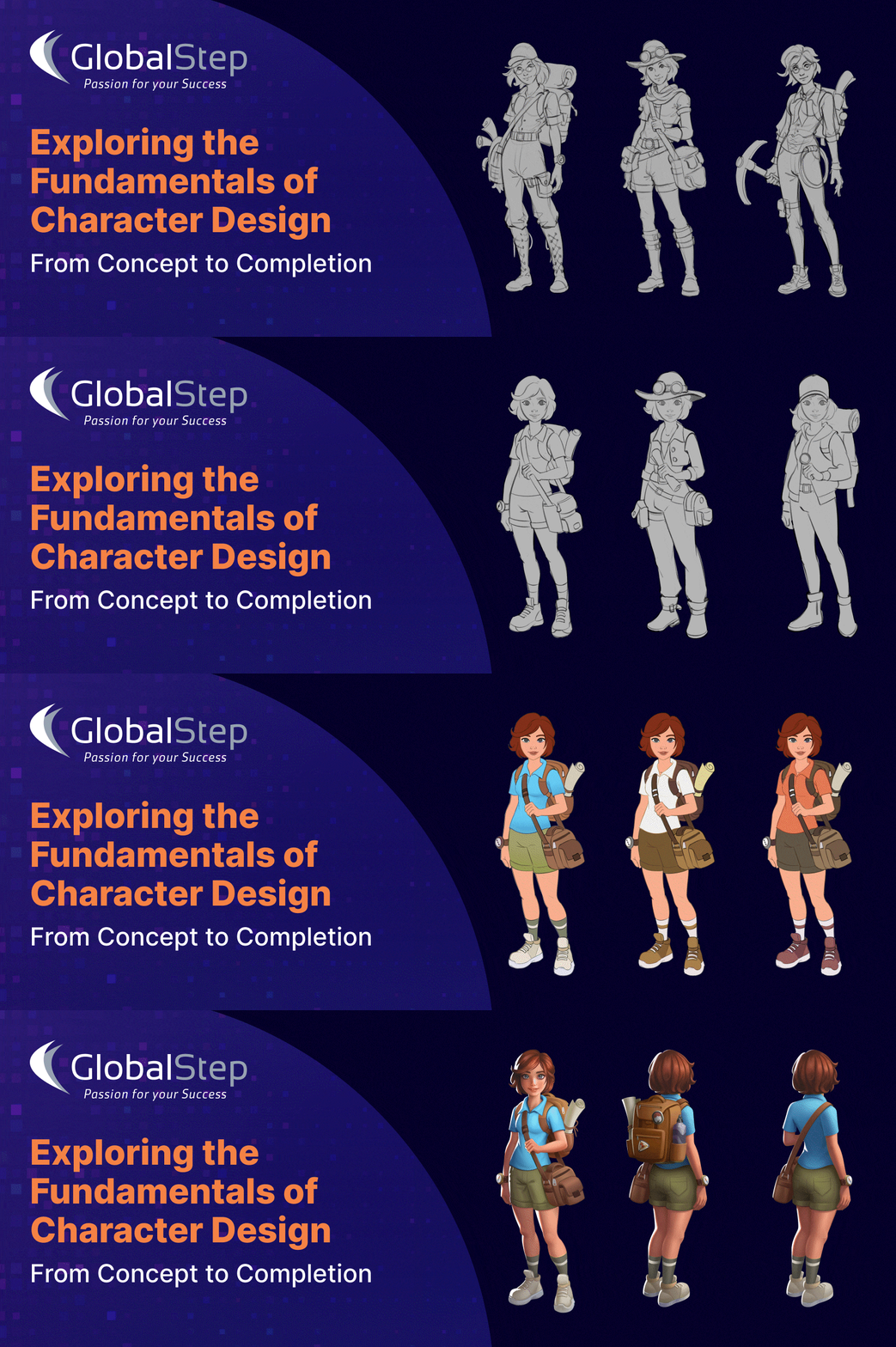
Exploring the Fundamentals of Character Design: From Concept to Completion

Share Via:

GIF description

Creating engaging game characters, from the first concept to the final game integration. 

Introduction 

Character design is the key to a player’s sense of joy. In video game development, it can provide a narrative perspective or serve as a vessel for self-expression. It’s a crucial factor in how players perceive and relate to the video game world, shaping their overall experience. Every step in the character design process is vital, from the first idea to the final animated model. This blog delves into the character design journey, exploring how game style, story, setting, and gameplay features influence the outcome. 

Concept Phase 

Depending on the type of game and the intended audience, designers explore various looks and feels for the IP. Factors like realism, stylization, humor, and brutality influence the choices made. Artists draw inspiration from culture, history, and different art styles that support the narrative and gameplay vision. Intentionality is crucial to ensure that characters fit seamlessly into the game’s story and world. This phase involves quick thumbnail sketches to define proportions, shapes, intricacy, body language, and personality. Through this concept phase, designers experiment with ways to differentiate from comparable titles and convey gameplay information effectively. 
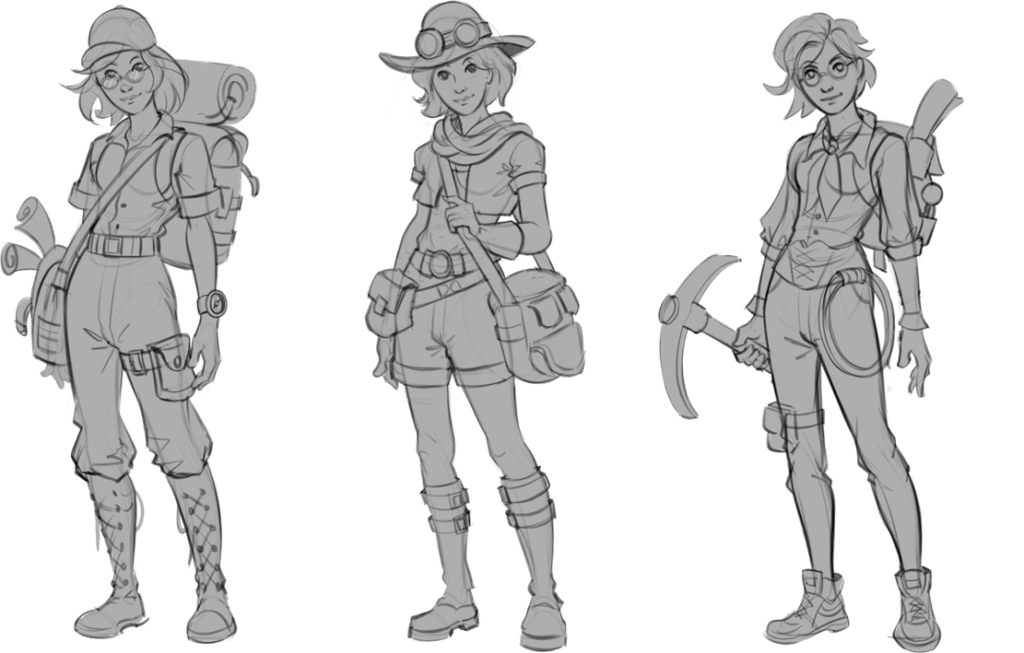
Initial Sketch Concept 

Styling and Aesthetics 

Defining a character’s canonical look is a critical aspect of IP design. The style—whether realistic, cartoonish, medieval, or futuristic—must align with the game’s overall visual approach. Designers play with thematic tones, colors, shapes, and outlines to evoke specific emotional responses. Adjectives like sneaky, lithe, leonine, sinewy, and opportunistic help guide the exploration of anatomy, color, fashion, weapon choice, and magical themes. After iterating with art leads and other key stakeholders, the design is fine-tuned to ensure it aligns with the character’s role in gameplay and narrative, fits cohesively with the rest of the game, and suits their importance within the story.
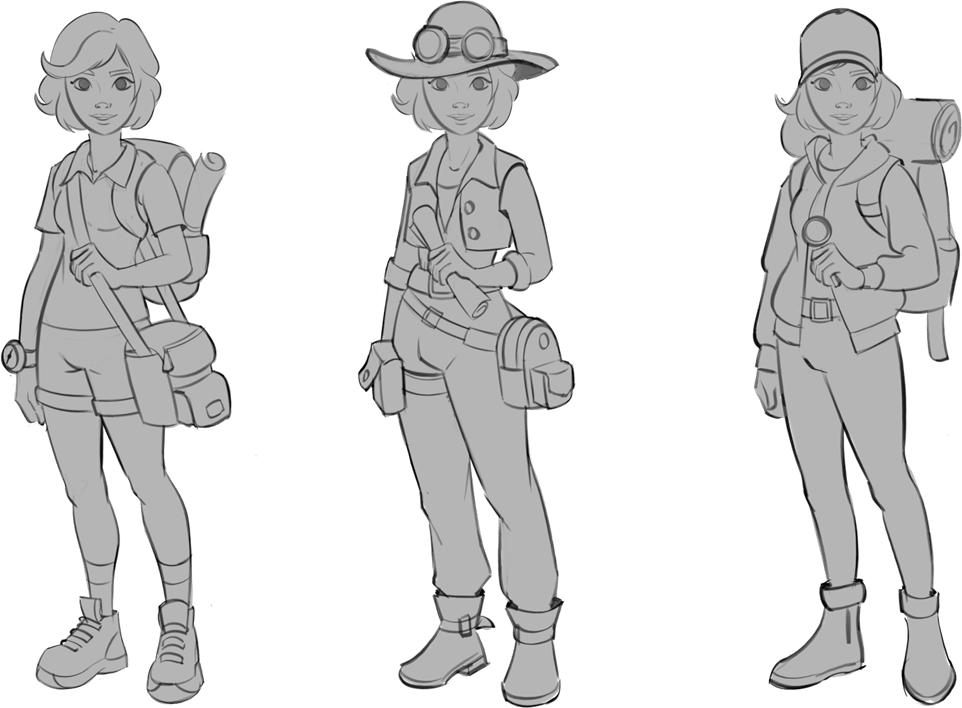
Enhanced Sketch
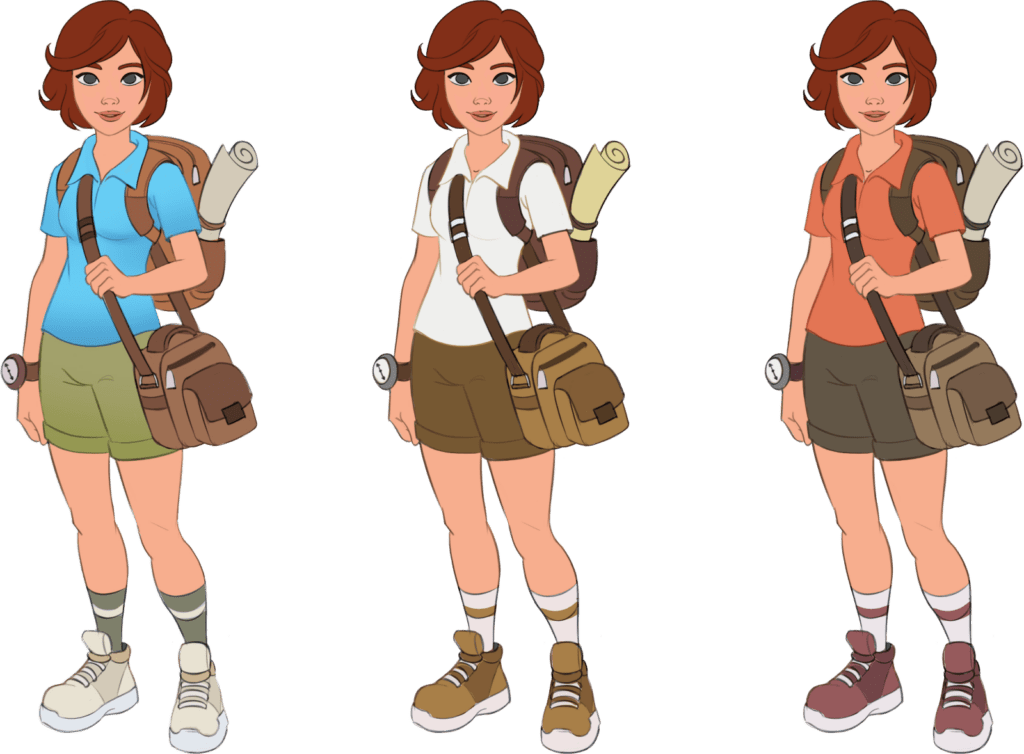
1st Color Draft 

Narrative and Character Backstory 

A well-designed character goes beyond appearance; they possess depth and motivation. Developing a rich backstory—even if it’s not fully revealed—adds layers of authenticity and quality. Giving characters strengths, flaws, and motives fosters emotional connections with players, enhancing their long-term engagement and interest in the game. 

Setting and Environment 

Characters must seamlessly integrate into the game’s world, creating a sense of immersion where the world reacts to their presence. In games where the environment affects characters and vice versa, this interaction enhances the player’s experience. Artists and designers carefully choose clothing and gear that fit the world’s ecosystems and movement style. If gameplay cues are communicated through the character’s appearance (e.g., damage, wetness), players will feel the dynamic interaction between the character and the world.
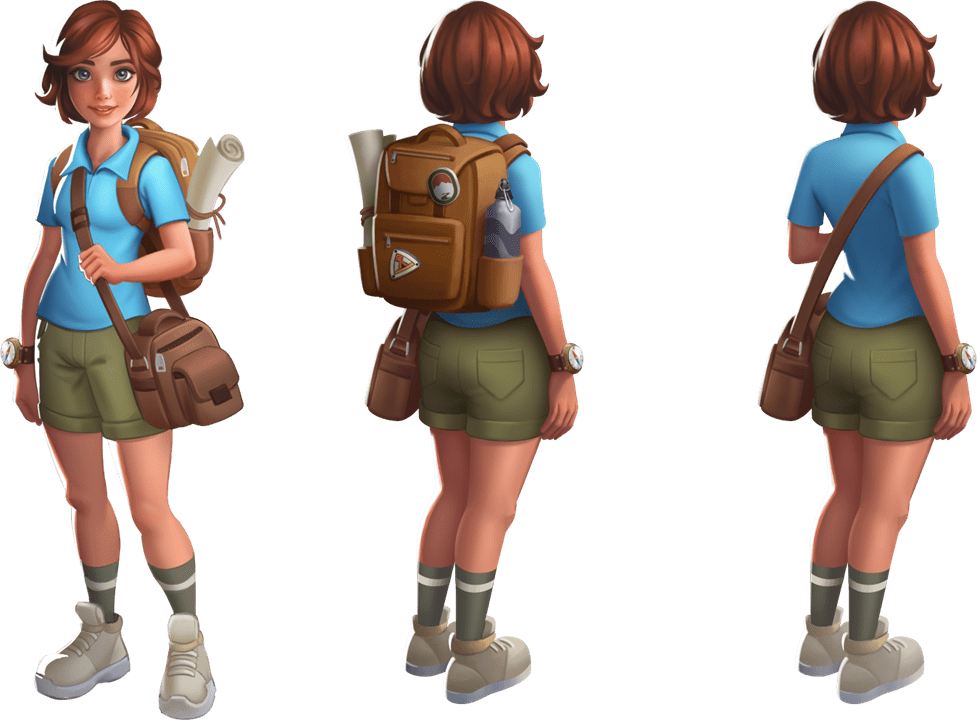
Final 2D Art Character Concept 

Gameplay Mechanics 

Integrating character design with gameplay elements is vital for creating a seamless gaming experience that doesn’t need a lot of UI to communicate with you. Game creators focus on crafting engaging characters that look striking and serve a purposeful role. They strike a balance between clear visuals, collision detection, smooth animations, and responsive controls to ensure characters feel intuitive across many scenarios of combat exploration and stealth. 

Modeling and Texturing 

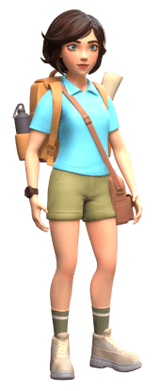
Transforming 2D concepts into 3D models varies based on the art style, platform, engine, and custom technology. Most modern games involve creating a high-resolution digital sculpture with intricate details and surfacing, then simplifying it into a lower-resolution mesh optimized for real-time rendering. This mesh is textured to replicate the detail of the high-res model and is animated using a virtual skeleton. The quality of textures and materials can make the character look more realistic or stylized, depending on the game’s visual direction. Fine-tuning for performance is crucial to ensure multiple characters can appear on screen simultaneously without causing low framerate. 
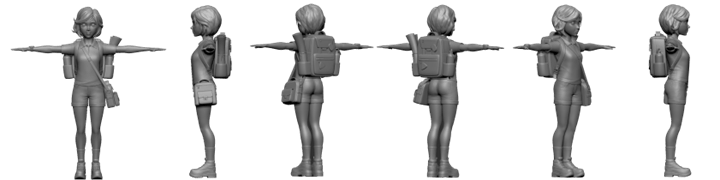
Hi-Res Model 
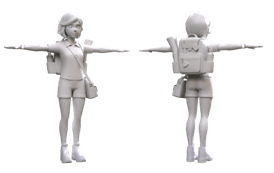
LOD 0 Model
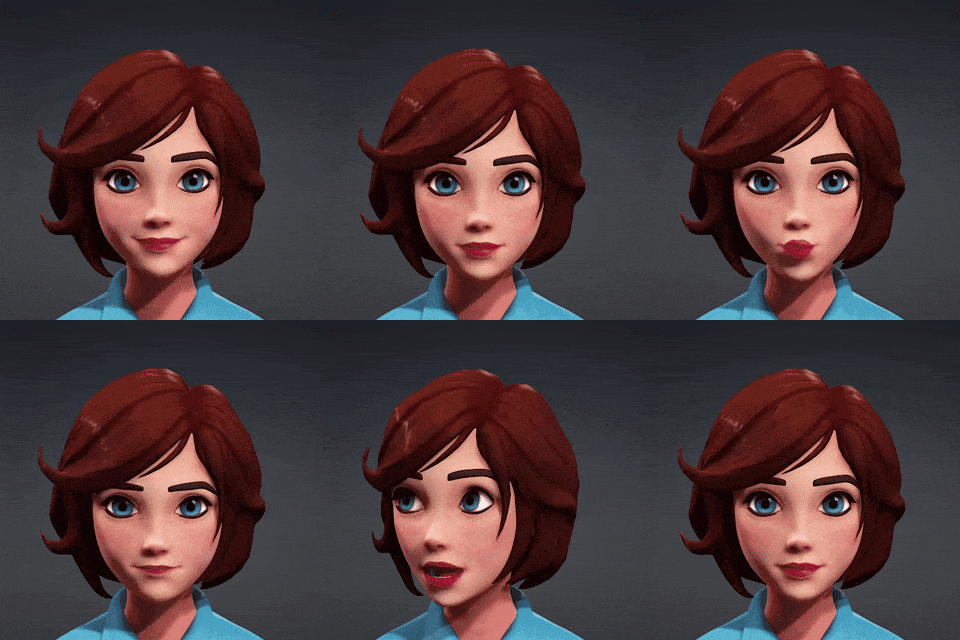
Facial Expression Animation 

Animation and Movement 

Creating animations that reflect a character’s personality and gameplay role is essential to bringing them to life. Whether standing idle, walking, or fighting, animations must be smooth, responsive, and seamlessly transition between states, allowing players to feel empowered and skillful. Testing and refining animations based on player feedback ensures a high-quality feel that enhances the game’s overall vibe
GIF description

Final Integration and Testing 

The final step involves integrating characters into the game engine, considering all other visual priorities and technical constraints. Environment art, materials, AI, collision, VFX, shaders, post-processing, and rendering features all impact performance. If the character looks great but doesn’t perform well, further iterations may be needed. Visual consistency across the entire character collection is also checked, especially for modular designs. Players often do things the developers didn’t anticipate, which can lead to new opportunities for improvement. Incorporating player feedback helps refine character appearance and behavior, ensuring an engaging game experience at launch. 

Narrative, expression and technical solutions. 

Often, a game requires multiple versions of the same character, known as Levels of Detail (LODs), tailored for different uses: 

  • LOD0: A detailed version with intricate facial expression controls and physics-driven clothing and hair for close-up cinematic moments. However, it’s too resource-intensive for combat, creating the need for LOD1. 
  • LOD1: Optimized for combat and general gameplay but too coarse for acting. It works well for action scenes but is still too detailed for distant views, leading to the need for LOD2. 
  • LOD2: Simplified for distant views, it retains only essential details for recognition from afar. 

Conclusion 

Character design impacts every aspect of video game development, from start to finish. Memorable characters leave a lasting impression on players and elevate the entire video game experience. At GlobalStep, our team of skilled artists and experts can help bring your characters to life with meticulous attention to aesthetic, emotional, and technical details using the latest tools. Whether you’re starting a new project or enhancing an existing one, GlobalStep is the ideal partner for creating exceptional game art

Ready to make your game characters stand out? Schedule a meeting with GlobalStep today to discover how our character design expertise can elevate your game to the next level. 
You might also want to check
Choosing the Right Game Art Partner for Seamless Workflow

Choosing the Right Game Art Partner for Seamless Workflow

In Part 1 of this blog series, we discussed how game art outsourcing is a strategic benefit for developers that value both quality and scaling. Part 2 then dissected the…
7 Key Factors for Evaluating a Game Art Partner

7 Key Factors for Evaluating a Game Art Partner

Developing art for a video game is a complex craft. It’s not just about making something look good, but translating your vision into a living, breathing world on screen. That…
Outsource to Outperform: How to Choose the Best Game Art Partner in 2025

Outsource to Outperform: How to Choose the Best Game Art Partner in 2025

Finding the right game art partner is no easy quest, and the success of your game could depend on it. In this two-part blog series, we’ll start by exploring why outsourcing is often the best choice, plus key models and benefits to consider before choosing a partner. Let’s get started!

The global gaming market is on track to exceed $363 billion by 2027. (UStimes) So, it goes without saying that making game art that stands out from the rest is a critical competitive advantage. Visuals aren’t just decoration — they form players’ first and lasting impressions. High-impact environments, memorable characters, and intuitive UI drive engagement and retention through thoughtful character design and overall game design.

Whether you’re an indie studio or an established publisher, augmenting your core art team with specialized partners lets you scale rapidly and control costs. But choosing the wrong partner can undermine your creative vision, slow your game development timeline, and ultimately your budget.

Partnering with the right game art team means balancing quality, speed, cost, and cultural fit — and that’s where GlobalStep’s nearly two decades of stylized-and-casual expertise ensures your project looks and plays exactly as you intend.

In-House vs. Outsourcing: Choosing the Right Model

To decide between in-house and game development outsourcing, compare the trade-offs below. An internal team offers full control and shared culture, while a game art outsourcing studio delivers on-demand game art services — from 2d game art outsourcing to 3d art services — with minimal overhead. Top game art outsourcing companies streamline art outsourcing and outsourcing game art so you scale fast without sacrificing quality.

 In-House TeamOutsourced Partner
Control & CultureDirect oversight, shared company values.Leverage established processes — vetted partners primed to learn and embody your team culture and adapts quickly to your priorities.
Upfront InvestmentVery high (hiring, benefits, workspace, training).Minimal — only pay for delivered assets, no long-term commitments or overhead.
Talent PoolA la carte talent pool but limited by local availability.Access to best-in-class specialists worldwide, across the style spectrum in 2D and 3D design from hand painted to PBR.
ScalabilitySlow, costly. Hiring/firing cycles can affect your PR.On-demand scaling — ramp team size up or down within days according to planned project milestones and seasonal needs.
Time to MarketLong ramp-up for recruitment and onboarding.Rapid kickoff via proven pipelines — start seeing concept art in weeks, not months.

Key Benefits of Outsourcing Your Game Art

  • Cost Efficiency: Some milestones are more intense than others. Increasing your internal headcount can slow down progress and be wasteful on low intensity cycles. Your funding can go farther when you supplemented (and boost) using scheduled spending per milestone.
  • Speed & Agility: Tap into ready-made teams with domain-specific pipelines — no onboarding lag. If your pipeline isn’t set, experts can design one that’s right for you.
  • Access to Innovation: Our varied experience gives us insight into various cutting-edge tools and workflows you get to use immediately.
  • Risk Mitigation: Shift responsibility for deadlines, quality assurance, and IP security to experts.


Now that we’ve covered why outsourcing is a smart move and how it supports your game development goals, stay tuned for Part 2 — where we break down the seven essential factors you should use to evaluate and choose the right game art partner.

Choosing the Right Game Art Partner for Seamless Workflow

Choosing the Right Game Art Partner for Seamless Workflow

In Part 1 of this blog series, we discussed how game art outsourcing is a strategic benefit for developers that value both quality and scaling. Part 2 then dissected the…
7 Key Factors for Evaluating a Game Art Partner

7 Key Factors for Evaluating a Game Art Partner

Developing art for a video game is a complex craft. It’s not just about making something look good, but translating your vision into a living, breathing world on screen. That…
Outsource to Outperform: How to Choose the Best Game Art Partner in 2025

Outsource to Outperform: How to Choose the Best Game Art Partner in 2025

Finding the right game art partner is no easy quest, and the success of your game could depend on it. In this two-part blog series, we’ll start by exploring why outsourcing is often the best choice, plus key models and benefits to consider before choosing a partner. Let’s get started!

The global gaming market is on track to exceed $363 billion by 2027. (UStimes) So, it goes without saying that making game art that stands out from the rest is a critical competitive advantage. Visuals aren’t just decoration — they form players’ first and lasting impressions. High-impact environments, memorable characters, and intuitive UI drive engagement and retention through thoughtful character design and overall game design.

Whether you’re an indie studio or an established publisher, augmenting your core art team with specialized partners lets you scale rapidly and control costs. But choosing the wrong partner can undermine your creative vision, slow your game development timeline, and ultimately your budget.

Partnering with the right game art team means balancing quality, speed, cost, and cultural fit — and that’s where GlobalStep’s nearly two decades of stylized-and-casual expertise ensures your project looks and plays exactly as you intend.

In-House vs. Outsourcing: Choosing the Right Model

To decide between in-house and game development outsourcing, compare the trade-offs below. An internal team offers full control and shared culture, while a game art outsourcing studio delivers on-demand game art services — from 2d game art outsourcing to 3d art services — with minimal overhead. Top game art outsourcing companies streamline art outsourcing and outsourcing game art so you scale fast without sacrificing quality.

 In-House TeamOutsourced Partner
Control & CultureDirect oversight, shared company values.Leverage established processes — vetted partners primed to learn and embody your team culture and adapts quickly to your priorities.
Upfront InvestmentVery high (hiring, benefits, workspace, training).Minimal — only pay for delivered assets, no long-term commitments or overhead.
Talent PoolA la carte talent pool but limited by local availability.Access to best-in-class specialists worldwide, across the style spectrum in 2D and 3D design from hand painted to PBR.
ScalabilitySlow, costly. Hiring/firing cycles can affect your PR.On-demand scaling — ramp team size up or down within days according to planned project milestones and seasonal needs.
Time to MarketLong ramp-up for recruitment and onboarding.Rapid kickoff via proven pipelines — start seeing concept art in weeks, not months.

Key Benefits of Outsourcing Your Game Art

  • Cost Efficiency: Some milestones are more intense than others. Increasing your internal headcount can slow down progress and be wasteful on low intensity cycles. Your funding can go farther when you supplemented (and boost) using scheduled spending per milestone.
  • Speed & Agility: Tap into ready-made teams with domain-specific pipelines — no onboarding lag. If your pipeline isn’t set, experts can design one that’s right for you.
  • Access to Innovation: Our varied experience gives us insight into various cutting-edge tools and workflows you get to use immediately.
  • Risk Mitigation: Shift responsibility for deadlines, quality assurance, and IP security to experts.


Now that we’ve covered why outsourcing is a smart move and how it supports your game development goals, stay tuned for Part 2 — where we break down the seven essential factors you should use to evaluate and choose the right game art partner.