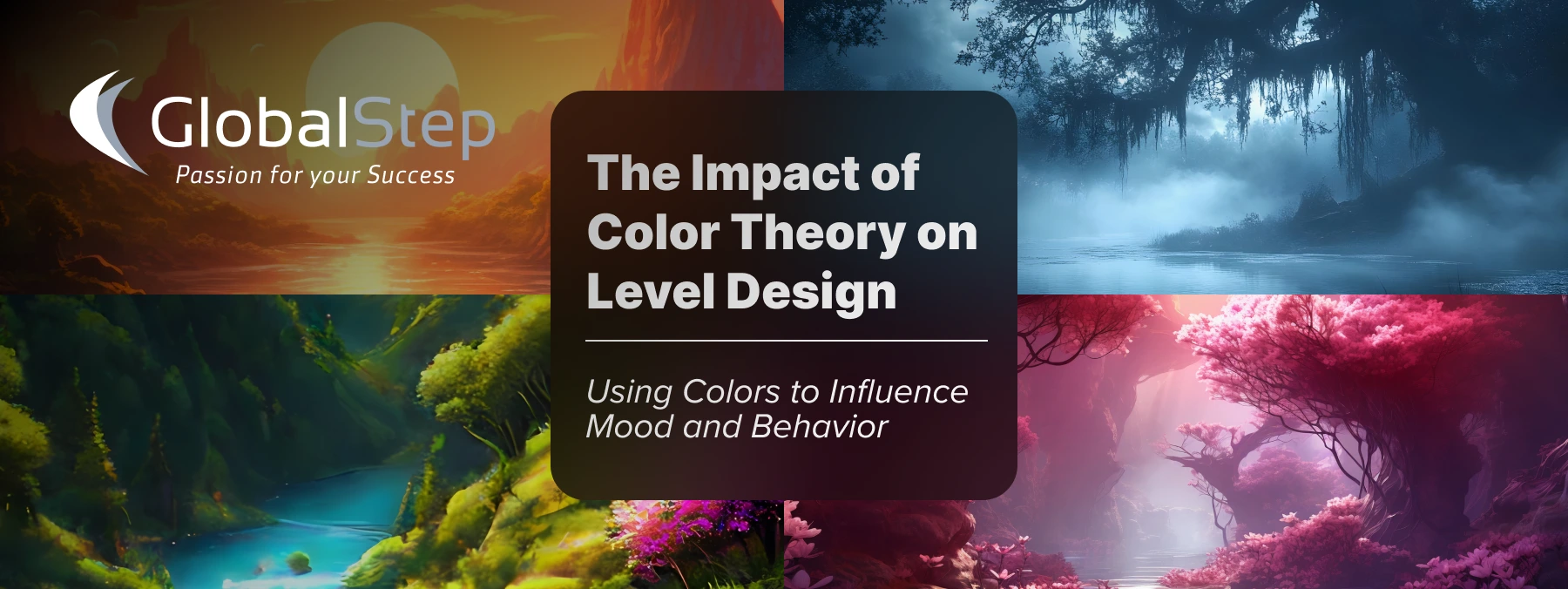
The Impact of Color Theory on Level Design: Using Colors to Influence Mood and Behavior

Share Via:

What makes a video game memorable worldwide? A lot of times, it is not the mechanics or the narrative; it’s that feeling that will often stay with the player. This feeling can be subtly shaped with one powerful tool: color. Color theory is an important aspect of level design in influencing mood, guiding behavior, and alchemically creating an immersive experience. Yet, so many designers let color fly right by, never quite giving gameplay the right boost it needs.  

The Problem: When Visuals and Player Emotions Don’t Align 

Of the common issues with level design, some of the most frequent offenders have to do with a collision between the look and feel of a game and the emotion behind it. You can make this incredibly hectic, high-stakes level, but if the colors don’t share in that intensity, then the effect on your player is suffered. 

Soft, soothing blues in a high-speed car-chase scene-just aren’t going to cut it. In the same vein, overreliance on neutrals or poor color schemes can result in confused players who cannot find critical paths. The challenge then, is to make color not only match the tone of a game but to make it guide a player through a level seamlessly, enhancing emotion and function at the same time. 

Setting the Mood with Color
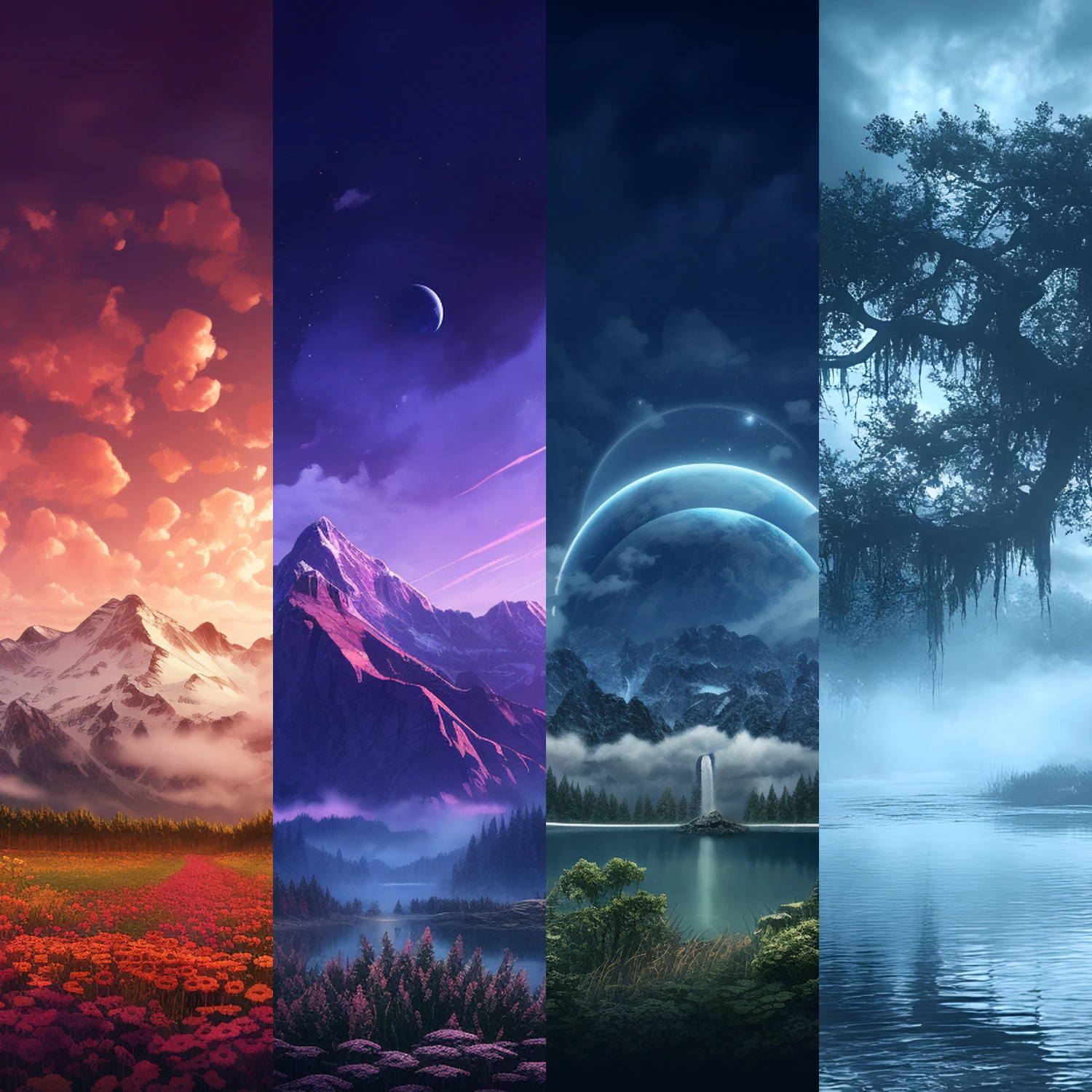
Color has an inherent ability to influence mood, and this is especially important when it comes to building atmosphere in a game. Different hues innately evoke different ends of emotions, and a well-chosen color scheme can raise a level’s emotional impact without players even realizing why they feel one way or another. Warm colors — reds, oranges, yellows — can provide excitement, energy, or even urgency; great for high-speed action or tough gameplay. Cool colors — blues and greens — can be so much calmer or reflective to evoke pause or depth during more relaxed sections of the game. Black, white, and gray are neutral tones that provide visual relief, keying the rest of the key elements to pop out, or in other words, create visual pause moments in a visually heavy environment. They allow designers to form a narrative arc inside the level itself and can take players on an emotional ride while guiding their experience. 

Color as a Behavioral Guide 

In addition to setting the mood, colors serve as a guide for player behavior by offering cues for interaction or progression. Through consistent use of color coding, players can quickly understand how to navigate through the game or interact with specific objects, improving overall flow and reducing confusion. Primary colors are often used to distinguish important gameplay elements from the background, making interactions easier and more intuitive. Bright accent colors can highlight bonuses or special features, drawing attention to interactive elements that might otherwise go unnoticed. By aligning color with gameplay mechanics, designers create an instinctive understanding of the game’s logic, helping players learn without the need for extensive tutorials. 

Another important aspect that can be covered under color is how color guides the players. For instance, if a certain path is critical for video game advancement, coloring that route with distinctive colors will make subtle suggestions for guidance to the players. 

Color can also be used to denote danger areas, safe areas, and objectives; thus, it speeds up navigation without necessarily using words. Clever color design keeps players immersed in the game world, not just playing it, feeling, and reacting to every step. 

It’s also important to make considerations for accessibility when adding color to the level design. For players that have color vision deficiencies, it may cause problems if important cues are color-based. You can create an experience more accommodating of an audience with vision defects by incorporating texture, shape, or brightness contrast in addition to the color.  

GlobalStep’s Expertise in Elevating Game Design 

At GlobalStep, we value how important it is to align the visual design with gameplay. From art direction to level design, our expert team sees to it that every color choice serves a purpose to further immerse the players, which heightens their experience. We will be able to assist studios in striking that perfect balance between creativity and clarity, guiding them through concept art all the way to the final polish for their levels.  

With profound understanding and knowledge of Color Theory and Player Psychology, minute details are never left unnoticed when designing the environment of the game.  

With our approach, studios can integrate perfectly into the video game development process, letting them focus on core mechanics while we make sure the visuals not only complement but elevate the experience. Whether you aim to craft a high-stakes battle or a more serene, exploratory journey, GlobalStep’s team will help you create stunning immersive worlds that resonate long after the controller is put down. 
You might also want to check
Fast and Beautiful: How to Optimize Game Art Without Losing Players

Fast and Beautiful: How to Optimize Game Art Without Losing Players

Low framerates kill immersion. Lag or choppy animations at an action moment can turn players off. Although great visuals create a game’s image, it is the performance that keeps players…
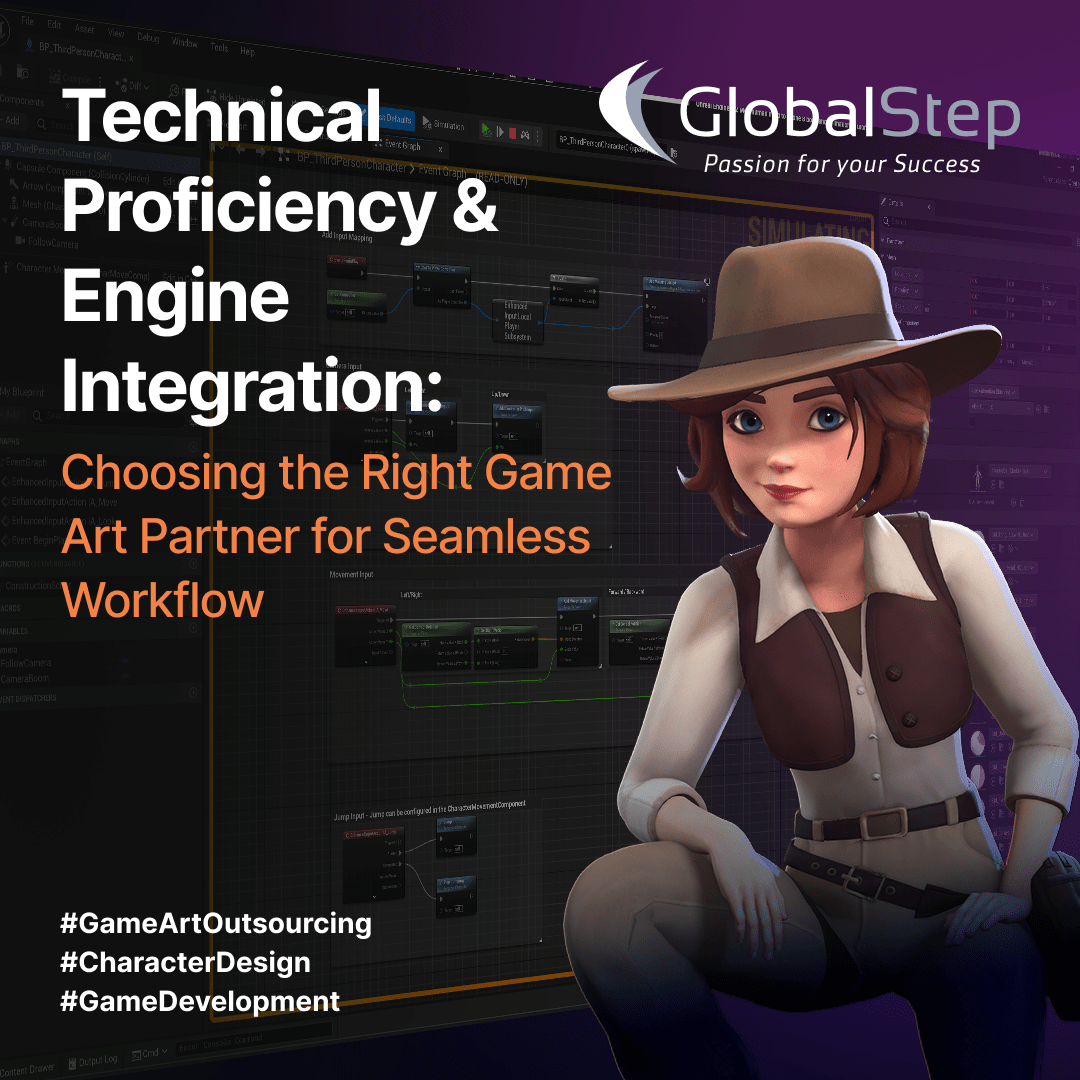
Choosing the Right Game Art Partner for Seamless Workflow

Choosing the Right Game Art Partner for Seamless Workflow

In Part 1 of this blog series, we discussed how game art outsourcing is a strategic benefit for developers that value both quality and scaling. Part 2 then dissected the…
Outsource to Outperform: How to Choose the Best Game Art Partner in 2025

Outsource to Outperform: How to Choose the Best Game Art Partner in 2025

Finding the right game art partner is no easy quest, and the success of your game could depend on it. In this two-part blog series, we’ll start by exploring why outsourcing is often the best choice, plus key models and benefits to consider before choosing a partner. Let’s get started!

The global gaming market is on track to exceed $363 billion by 2027. (UStimes) So, it goes without saying that making game art that stands out from the rest is a critical competitive advantage. Visuals aren’t just decoration — they form players’ first and lasting impressions. High-impact environments, memorable characters, and intuitive UI drive engagement and retention through thoughtful character design and overall game design.

Whether you’re an indie studio or an established publisher, augmenting your core art team with specialized partners lets you scale rapidly and control costs. But choosing the wrong partner can undermine your creative vision, slow your game development timeline, and ultimately your budget.

Partnering with the right game art team means balancing quality, speed, cost, and cultural fit — and that’s where GlobalStep’s nearly two decades of stylized-and-casual expertise ensures your project looks and plays exactly as you intend.

In-House vs. Outsourcing: Choosing the Right Model

To decide between in-house and game development outsourcing, compare the trade-offs below. An internal team offers full control and shared culture, while a game art outsourcing studio delivers on-demand game art services — from 2d game art outsourcing to 3d art services — with minimal overhead. Top game art outsourcing companies streamline art outsourcing and outsourcing game art so you scale fast without sacrificing quality.

 In-House TeamOutsourced Partner
Control & CultureDirect oversight, shared company values.Leverage established processes — vetted partners primed to learn and embody your team culture and adapts quickly to your priorities.
Upfront InvestmentVery high (hiring, benefits, workspace, training).Minimal — only pay for delivered assets, no long-term commitments or overhead.
Talent PoolA la carte talent pool but limited by local availability.Access to best-in-class specialists worldwide, across the style spectrum in 2D and 3D design from hand painted to PBR.
ScalabilitySlow, costly. Hiring/firing cycles can affect your PR.On-demand scaling — ramp team size up or down within days according to planned project milestones and seasonal needs.
Time to MarketLong ramp-up for recruitment and onboarding.Rapid kickoff via proven pipelines — start seeing concept art in weeks, not months.

Key Benefits of Outsourcing Your Game Art

  • Cost Efficiency: Some milestones are more intense than others. Increasing your internal headcount can slow down progress and be wasteful on low intensity cycles. Your funding can go farther when you supplemented (and boost) using scheduled spending per milestone.
  • Speed & Agility: Tap into ready-made teams with domain-specific pipelines — no onboarding lag. If your pipeline isn’t set, experts can design one that’s right for you.
  • Access to Innovation: Our varied experience gives us insight into various cutting-edge tools and workflows you get to use immediately.
  • Risk Mitigation: Shift responsibility for deadlines, quality assurance, and IP security to experts.


Now that we’ve covered why outsourcing is a smart move and how it supports your game development goals, stay tuned for Part 2 — where we break down the seven essential factors you should use to evaluate and choose the right game art partner.

Fast and Beautiful: How to Optimize Game Art Without Losing Players

Fast and Beautiful: How to Optimize Game Art Without Losing Players

Low framerates kill immersion. Lag or choppy animations at an action moment can turn players off. Although great visuals create a game’s image, it is the performance that keeps players…
Choosing the Right Game Art Partner for Seamless Workflow

Choosing the Right Game Art Partner for Seamless Workflow

In Part 1 of this blog series, we discussed how game art outsourcing is a strategic benefit for developers that value both quality and scaling. Part 2 then dissected the…
Outsource to Outperform: How to Choose the Best Game Art Partner in 2025

Outsource to Outperform: How to Choose the Best Game Art Partner in 2025

Finding the right game art partner is no easy quest, and the success of your game could depend on it. In this two-part blog series, we’ll start by exploring why outsourcing is often the best choice, plus key models and benefits to consider before choosing a partner. Let’s get started!

The global gaming market is on track to exceed $363 billion by 2027. (UStimes) So, it goes without saying that making game art that stands out from the rest is a critical competitive advantage. Visuals aren’t just decoration — they form players’ first and lasting impressions. High-impact environments, memorable characters, and intuitive UI drive engagement and retention through thoughtful character design and overall game design.

Whether you’re an indie studio or an established publisher, augmenting your core art team with specialized partners lets you scale rapidly and control costs. But choosing the wrong partner can undermine your creative vision, slow your game development timeline, and ultimately your budget.

Partnering with the right game art team means balancing quality, speed, cost, and cultural fit — and that’s where GlobalStep’s nearly two decades of stylized-and-casual expertise ensures your project looks and plays exactly as you intend.

In-House vs. Outsourcing: Choosing the Right Model

To decide between in-house and game development outsourcing, compare the trade-offs below. An internal team offers full control and shared culture, while a game art outsourcing studio delivers on-demand game art services — from 2d game art outsourcing to 3d art services — with minimal overhead. Top game art outsourcing companies streamline art outsourcing and outsourcing game art so you scale fast without sacrificing quality.

 In-House TeamOutsourced Partner
Control & CultureDirect oversight, shared company values.Leverage established processes — vetted partners primed to learn and embody your team culture and adapts quickly to your priorities.
Upfront InvestmentVery high (hiring, benefits, workspace, training).Minimal — only pay for delivered assets, no long-term commitments or overhead.
Talent PoolA la carte talent pool but limited by local availability.Access to best-in-class specialists worldwide, across the style spectrum in 2D and 3D design from hand painted to PBR.
ScalabilitySlow, costly. Hiring/firing cycles can affect your PR.On-demand scaling — ramp team size up or down within days according to planned project milestones and seasonal needs.
Time to MarketLong ramp-up for recruitment and onboarding.Rapid kickoff via proven pipelines — start seeing concept art in weeks, not months.

Key Benefits of Outsourcing Your Game Art

  • Cost Efficiency: Some milestones are more intense than others. Increasing your internal headcount can slow down progress and be wasteful on low intensity cycles. Your funding can go farther when you supplemented (and boost) using scheduled spending per milestone.
  • Speed & Agility: Tap into ready-made teams with domain-specific pipelines — no onboarding lag. If your pipeline isn’t set, experts can design one that’s right for you.
  • Access to Innovation: Our varied experience gives us insight into various cutting-edge tools and workflows you get to use immediately.
  • Risk Mitigation: Shift responsibility for deadlines, quality assurance, and IP security to experts.


Now that we’ve covered why outsourcing is a smart move and how it supports your game development goals, stay tuned for Part 2 — where we break down the seven essential factors you should use to evaluate and choose the right game art partner.