Localization at Scale: Meeting the Demands of Hyper-Personalized Gaming Experiences

Share Via:

You boot up a new title, and everything clicks. The dialogue works, the jokes land, and nothing feels forced or out of character. Yet it’s not just the spoken word — everything from UI elements to quest cues, menu designs, and tooltips is natural and intuitive, guiding you seamlessly through the experience. It doesn’t matter if a title began life in Japan, America, or Poland — it’s tailored to your eyes and ears alone. That’s localization at its finest. And these days, reaching that sense of immersion is more challenging than ever in a gaming generation that demands both technical precision and cultural sensitivity.

Localization isn’t about translating between languages, but about reimagining intent, humor, and cultural detail in a way that doesn’t break immersion. What’s a killer in English can become a headscratcher in Mandarin. What’s a perfectly coherent questline for a Western player can fall apart for Middle Eastern players altogether. Personalized, region-specific experiences have become an expectation. 

Speed vs. Quality: An On-Goin’ Battle 

The biggest challenge? Velocity. Live-service games, continuous patches, and real-time events make continuous localization a requirement. There’s a seasonal update, and then new dialogue, UI, and tooltips appear, and you must have them localized rapidly. Nobody wants to wait for a localization update when everyone else on the planet is grinded for new loot. 

Optimum localization is transparent — players should feel their native language is being utilized in-game from the start. That level can only be attained with native speakers leveraging gaming expertise, deep localization testing, and integration with game development pipelines seamlessly. 

Beyond Translation: The Depth of Real Localization 

Localization isn’t a matter of simply translating language. Voice over, UI placement, quest flow, menu structures, cultural references, even artwork and animation can all enter into it. A missed localized pun is one thing; a graphical bug excluding a whole group of persons is worse. Slang, even censorship and legislation around terms and references must be taken into consideration. What works in one region can be banned in another. 

Literal translation may not work. Successful localization doesn’t merely translate language, but contextualizes, conveys intention, and gameplay flow. That’s why high-end studios mix and match human expertise with smart automation for localization and LQA. Leveraging Machine translation is possible depending on content type, domain, source text, but when it fails our expert Post Editors  dial in, getting each line to flow naturally. Localization testing then finds defects in advance, from UI overruns in language to dun-intended meanings.

Scaling Localization Without Compromising Immersion 
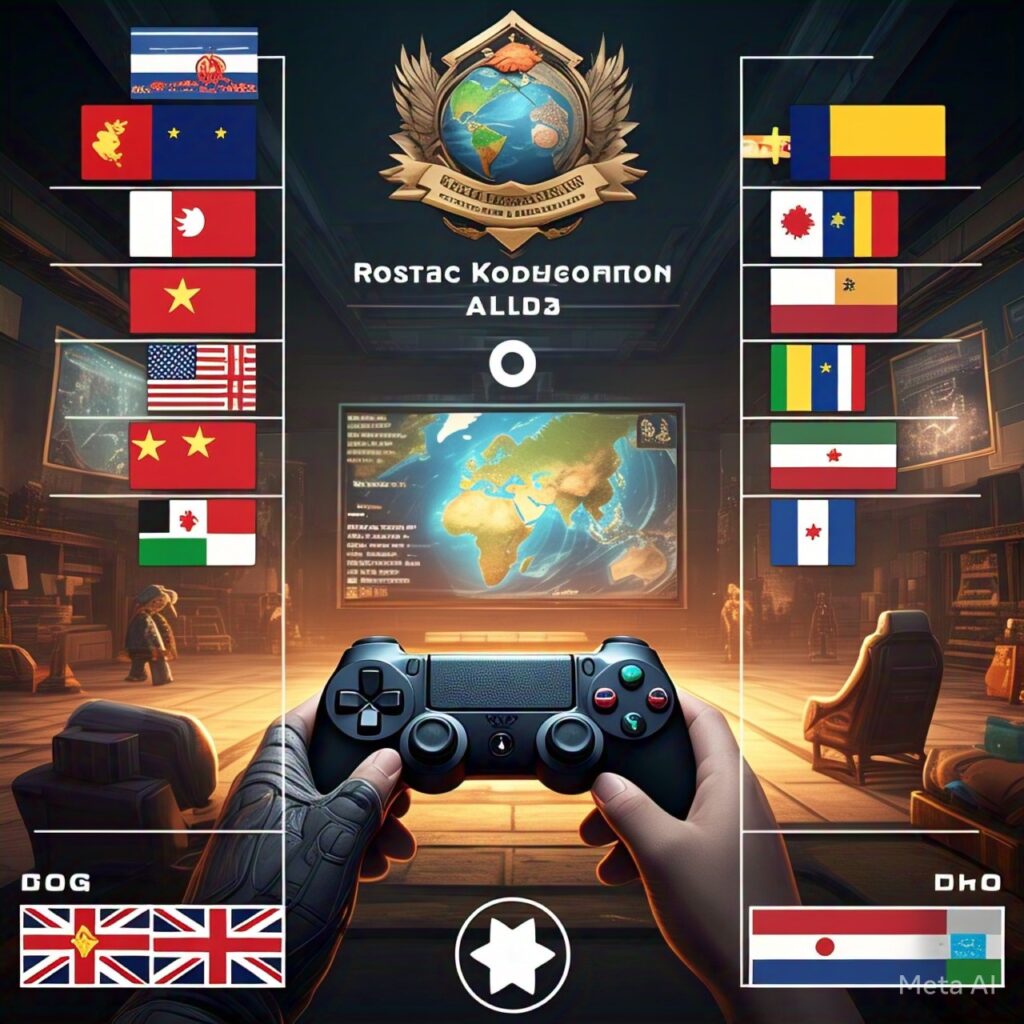
Expanding to a global base doesn’t necessarily require compromising on authenticity. Players insist a game must have a native, not translated, sensation. But when translating for a dozen-plus regions, the issue isn’t necessarily one of language — but one of technology, culture, and operations. Poor localization can destroy immersion in a single moment, through clunky phrasing, poorly matched voiceovers, and UI that feels off. 

Scaling without sacrificing quality is about combining expert human translators with efficient automation, optimized processes, and built in LQA. It’s about providing uniformity in in-game dialogue, voiceovers, UI, and marketing assets, in harmony with development velocity. Optimum localization pipelines don’t merely translate, but tailor, with regard to tone, humor, and emotional cues for a specific target group. 

Partnering with GlobalStep for Scalable, High-Quality Localization 

At GlobalStep, localization isn’t a matter of translation, but about providing an immersive gaming environment for any player, anywhere, such that it feels native-made for them. With our full-cycle localization, our workflows integrate seamlessly with development pipelines, their updates, patches, and expansion packs go through processing with efficiency and no loss in quality. 

With a native-speaking localization group, cutting-edge language QA, and cultural adaption expertise, we allow studios to navigate the complexities of multilingual releases with accuracy and speed. Whatever it takes to tailor humor, voiceovers, and UI text for a flawless integration in each language, we have the talent to deliver rich, immersive, localized experiences at scale. Want to make your game resonate with a worldwide player base? Get in touch with GlobalStep today and develop a localization strategy that brings both quality and velocity — no compromise included. 
 
Know more about our localization services 

Read other blogs on Localization 
Get in touch with us today 
You might also want to check
Choosing the Right Game Art Partner for Seamless Workflow

Choosing the Right Game Art Partner for Seamless Workflow

In Part 1 of this blog series, we discussed how game art outsourcing is a strategic benefit for developers that value both quality and scaling. Part 2 then dissected the…
7 Key Factors for Evaluating a Game Art Partner

7 Key Factors for Evaluating a Game Art Partner

Developing art for a video game is a complex craft. It’s not just about making something look good, but translating your vision into a living, breathing world on screen. That…
Outsource to Outperform: How to Choose the Best Game Art Partner in 2025

Outsource to Outperform: How to Choose the Best Game Art Partner in 2025

Finding the right game art partner is no easy quest, and the success of your game could depend on it. In this two-part blog series, we’ll start by exploring why outsourcing is often the best choice, plus key models and benefits to consider before choosing a partner. Let’s get started!

The global gaming market is on track to exceed $363 billion by 2027. (UStimes) So, it goes without saying that making game art that stands out from the rest is a critical competitive advantage. Visuals aren’t just decoration — they form players’ first and lasting impressions. High-impact environments, memorable characters, and intuitive UI drive engagement and retention through thoughtful character design and overall game design.

Whether you’re an indie studio or an established publisher, augmenting your core art team with specialized partners lets you scale rapidly and control costs. But choosing the wrong partner can undermine your creative vision, slow your game development timeline, and ultimately your budget.

Partnering with the right game art team means balancing quality, speed, cost, and cultural fit — and that’s where GlobalStep’s nearly two decades of stylized-and-casual expertise ensures your project looks and plays exactly as you intend.

In-House vs. Outsourcing: Choosing the Right Model

To decide between in-house and game development outsourcing, compare the trade-offs below. An internal team offers full control and shared culture, while a game art outsourcing studio delivers on-demand game art services — from 2d game art outsourcing to 3d art services — with minimal overhead. Top game art outsourcing companies streamline art outsourcing and outsourcing game art so you scale fast without sacrificing quality.

 In-House TeamOutsourced Partner
Control & CultureDirect oversight, shared company values.Leverage established processes — vetted partners primed to learn and embody your team culture and adapts quickly to your priorities.
Upfront InvestmentVery high (hiring, benefits, workspace, training).Minimal — only pay for delivered assets, no long-term commitments or overhead.
Talent PoolA la carte talent pool but limited by local availability.Access to best-in-class specialists worldwide, across the style spectrum in 2D and 3D design from hand painted to PBR.
ScalabilitySlow, costly. Hiring/firing cycles can affect your PR.On-demand scaling — ramp team size up or down within days according to planned project milestones and seasonal needs.
Time to MarketLong ramp-up for recruitment and onboarding.Rapid kickoff via proven pipelines — start seeing concept art in weeks, not months.

Key Benefits of Outsourcing Your Game Art

  • Cost Efficiency: Some milestones are more intense than others. Increasing your internal headcount can slow down progress and be wasteful on low intensity cycles. Your funding can go farther when you supplemented (and boost) using scheduled spending per milestone.
  • Speed & Agility: Tap into ready-made teams with domain-specific pipelines — no onboarding lag. If your pipeline isn’t set, experts can design one that’s right for you.
  • Access to Innovation: Our varied experience gives us insight into various cutting-edge tools and workflows you get to use immediately.
  • Risk Mitigation: Shift responsibility for deadlines, quality assurance, and IP security to experts.


Now that we’ve covered why outsourcing is a smart move and how it supports your game development goals, stay tuned for Part 2 — where we break down the seven essential factors you should use to evaluate and choose the right game art partner.

Choosing the Right Game Art Partner for Seamless Workflow

Choosing the Right Game Art Partner for Seamless Workflow

In Part 1 of this blog series, we discussed how game art outsourcing is a strategic benefit for developers that value both quality and scaling. Part 2 then dissected the…
7 Key Factors for Evaluating a Game Art Partner

7 Key Factors for Evaluating a Game Art Partner

Developing art for a video game is a complex craft. It’s not just about making something look good, but translating your vision into a living, breathing world on screen. That…
Outsource to Outperform: How to Choose the Best Game Art Partner in 2025

Outsource to Outperform: How to Choose the Best Game Art Partner in 2025

Finding the right game art partner is no easy quest, and the success of your game could depend on it. In this two-part blog series, we’ll start by exploring why outsourcing is often the best choice, plus key models and benefits to consider before choosing a partner. Let’s get started!

The global gaming market is on track to exceed $363 billion by 2027. (UStimes) So, it goes without saying that making game art that stands out from the rest is a critical competitive advantage. Visuals aren’t just decoration — they form players’ first and lasting impressions. High-impact environments, memorable characters, and intuitive UI drive engagement and retention through thoughtful character design and overall game design.

Whether you’re an indie studio or an established publisher, augmenting your core art team with specialized partners lets you scale rapidly and control costs. But choosing the wrong partner can undermine your creative vision, slow your game development timeline, and ultimately your budget.

Partnering with the right game art team means balancing quality, speed, cost, and cultural fit — and that’s where GlobalStep’s nearly two decades of stylized-and-casual expertise ensures your project looks and plays exactly as you intend.

In-House vs. Outsourcing: Choosing the Right Model

To decide between in-house and game development outsourcing, compare the trade-offs below. An internal team offers full control and shared culture, while a game art outsourcing studio delivers on-demand game art services — from 2d game art outsourcing to 3d art services — with minimal overhead. Top game art outsourcing companies streamline art outsourcing and outsourcing game art so you scale fast without sacrificing quality.

 In-House TeamOutsourced Partner
Control & CultureDirect oversight, shared company values.Leverage established processes — vetted partners primed to learn and embody your team culture and adapts quickly to your priorities.
Upfront InvestmentVery high (hiring, benefits, workspace, training).Minimal — only pay for delivered assets, no long-term commitments or overhead.
Talent PoolA la carte talent pool but limited by local availability.Access to best-in-class specialists worldwide, across the style spectrum in 2D and 3D design from hand painted to PBR.
ScalabilitySlow, costly. Hiring/firing cycles can affect your PR.On-demand scaling — ramp team size up or down within days according to planned project milestones and seasonal needs.
Time to MarketLong ramp-up for recruitment and onboarding.Rapid kickoff via proven pipelines — start seeing concept art in weeks, not months.

Key Benefits of Outsourcing Your Game Art

  • Cost Efficiency: Some milestones are more intense than others. Increasing your internal headcount can slow down progress and be wasteful on low intensity cycles. Your funding can go farther when you supplemented (and boost) using scheduled spending per milestone.
  • Speed & Agility: Tap into ready-made teams with domain-specific pipelines — no onboarding lag. If your pipeline isn’t set, experts can design one that’s right for you.
  • Access to Innovation: Our varied experience gives us insight into various cutting-edge tools and workflows you get to use immediately.
  • Risk Mitigation: Shift responsibility for deadlines, quality assurance, and IP security to experts.


Now that we’ve covered why outsourcing is a smart move and how it supports your game development goals, stay tuned for Part 2 — where we break down the seven essential factors you should use to evaluate and choose the right game art partner.